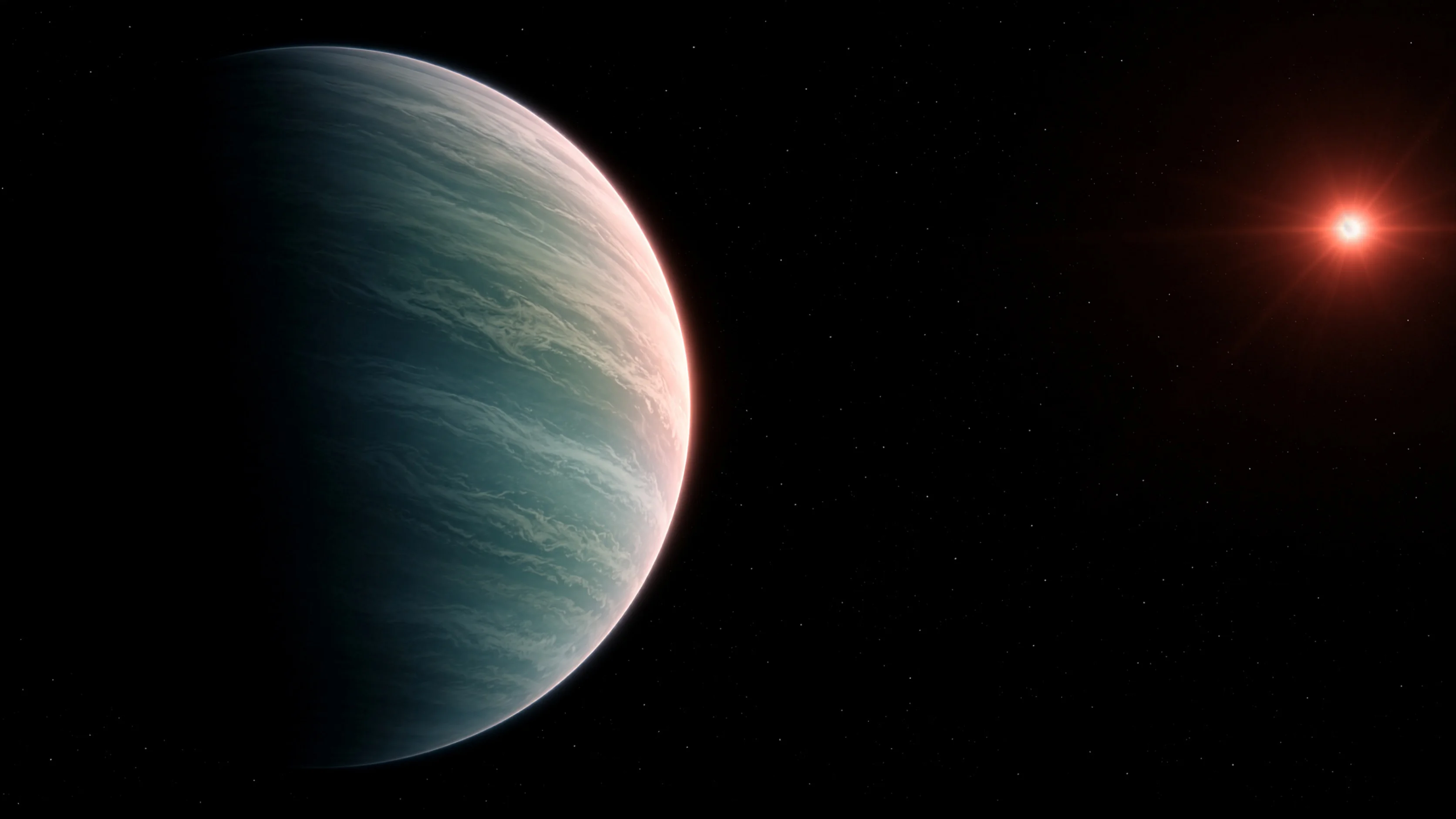
K2-18b. Ein Planet, der vielleicht atmet.
Eine fiktive Drei-Niveau-Vermittlung einer realen JWST-Entdeckung als Use Case für Wissenschaftsvermittlung. Wie eine Plattform funktionieren kann, wenn dieselbe Tatsache für Kind, Neugierige und Forschung erzählbar werden soll.
K2-18b. Ein Planet, der vielleicht atmet.
Eine fiktive Drei-Niveau-Vermittlung einer realen JWST-Entdeckung als Use Case für Wissenschaftsvermittlung. Wie eine Plattform funktionieren kann, wenn dieselbe Tatsache für Kind, Neugierige und Forschung erzählbar werden soll.
Eine Entdeckung, für drei Niveaus erzählbar.
Was dieser Service ist
Science als Service: dieselbe Entdeckung in drei Tiefen verfügbar machen, ohne dass eine der Tiefen die anderen banalisiert. Die Sechsjährige soll staunen. Die Neugierige soll verstehen. Die Forscherin soll wiedererkennen.
Die Subpage hier zeigt das am Beispiel der JWST-Beobachtungen am Exoplaneten K2-18b. Eine reale Entdeckung mit echter wissenschaftlicher Kontroverse. Drei Niveaus, eine Datenbasis, ein Wechsel-Schalter.
Drei Niveaus
Explorer · Expander · Explainer im Switch
Spektrum
Adaptiv pro Niveau, mit Sigma-Bändern
Konfidenz
2σ vorläufig · 3σ Hinweis · 5σ Detektion
Bibliothek
DOI, Abstract, BibTeX zum Zitieren
Wofür passt es, wofür nicht
- Forschung mit gestaffelter Vermittlung an Schule, Öffentlichkeit, Fach
- Themen mit ehrlicher Unsicherheit und echter Debatte
- Institutionen mit Anspruch auf wissenschaftliche Korrektheit
- Bildungs-Initiativen mit mehreren Altersstufen
- verkürzte Wissenschafts-Botschaft mit nur einem Niveau
- Themen ohne tragfähige peer-reviewte Grundlage
- Vermittlung, die Konsens vortäuscht wo keiner ist
- Plattformen ohne wissenschaftliche Begleitung
Die Ausgangslage
Eine Universität, ein Planetarium und ein nationales Forschungsförderwerk wollen eine aktuelle Entdeckung vermitteln. Die Schlagzeile schreibt sich von selber. Aber die Geschichte dahinter ist komplex, ehrlich kontrovers, voller methodischer Feinheit.
Was wäre, wenn dieselbe Entdeckung an einem Ort dreifach zugänglich wäre. Mit einem Switcher zwischen Niveaus. Mit einem Spektrum, das je nach Stufe vereinfacht oder voll erscheint. Mit einer Bibliothek der Paper für jene, die tiefer wollen.
Das Folgende ist diese Drei-Niveau-Vermittlung als Skizze.
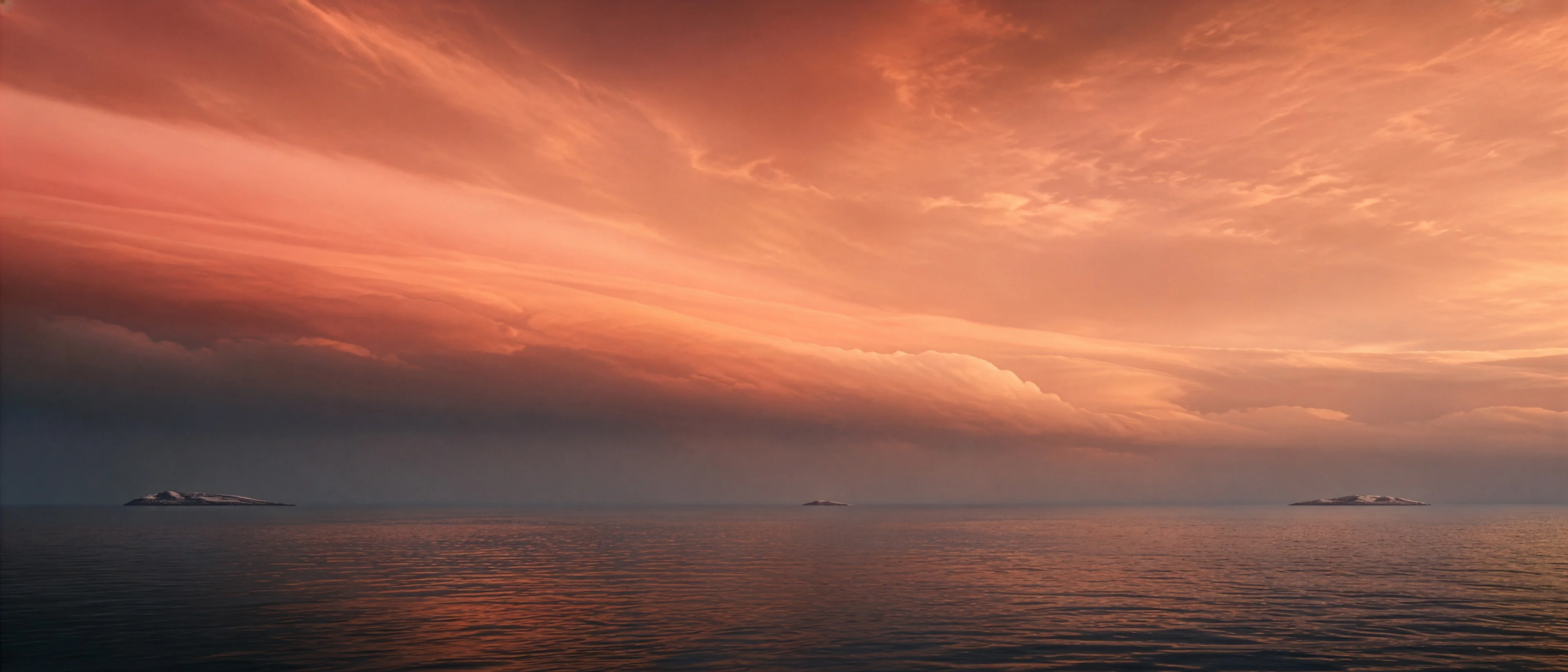
Künstler-Konzept einer Hyceanwelt-Oberfläche · keine reale Aufnahme
Drei Niveaus, eine Atmosphäre
JWST hat in der Atmosphäre des Exoplaneten K2-18b Moleküle gemessen, deren Vorkommen auf der Erde eng mit Leben verknüpft ist. Was das wirklich bedeutet, hängt am Niveau, auf dem du hinschaust.
K2-18b · Sub-Neptun, 2.6 Erdradien
33 Tage · habitable Zone
K2-18 · Roter Zwerg
124 Lichtjahre · Sternbild Löwe
Der Weg einer Entdeckung
Wissenschaft passiert über Zeit, mit Detektionen, Folgestudien, Re-Analysen, Replikationen. Klick auf eine Station, um zur entsprechenden Publikation in der Bibliothek zu springen.
- 2015
Entdeckung
K2-18b erstmals im K2-Mission-Datensatz von Kepler identifiziert (Montet et al.).
- 2019
Wasserdampf-Hinweis
Hubble-Beobachtungen zeigen erste Hinweise auf H₂O in der Atmosphäre (Tsiaras et al., Nature Astronomy).
- 2021
Hycean-Rahmen
Theoretische Klassifikation der „Hycean Worlds“ wird publiziert (Madhusudhan & Piette).
- 2023 · September
Erster DMS-Hinweis
JWST · NIRISS und NIRSpec detektieren Signal konsistent mit Dimethylsulfid, 3σ.
- 2025 · April
MIRI-Folgestudie
Mittel-Infrarot-Daten verstärken die DMS / DMDS-Hinweise auf 3 - 3.5σ.
- 2025 · August
Unabhängige Re-Reduktion
Schmidt et al. reduzieren die MIRI-Daten neu. Die DMS-Signatur fällt unter Detektions-Schwelle.
- 2026
Replikation läuft
JWST Cycle 4 Beobachtungen mit MIRI-LRS zur Replikation des 9-11 μm-Bands sind beantragt.
- 2027
Erwartete Klärung
Konsens-Linie der Konferenz-Sessions 2025: 2027 sollte die DMS-Frage entweder erhärten oder schliessen.
Stand September 2026. Quellen NASA ADS und arXiv. Die Liste wird laufend aktualisiert.
Inhalt, Spektrum-Diagramm und Begriffe wechseln je nach Stufe.
K2-18b ist ein Sub-Neptun, etwa 2.6 Erdradien gross, in der habitablen Zone eines roten Zwergsterns. James Webb hat in seiner Atmosphäre Wasserdampf, Methan und CO₂ klar nachgewiesen.
2023 publizierte ein Team um Madhusudhan in Cambridge erste Hinweise auf Dimethylsulfid, kurz DMS. Auf der Erde wird DMS fast ausschliesslich von Plankton produziert. Wenn es ausserirdisch nachweisbar wäre, wäre das eine Biosignatur ersten Ranges.
Eine Folgestudie im April 2025 mit dem mittleren Infrarot-Instrument MIRI berichtete erneut von Signalen, die mit DMS und DMDS verträglich sind, mit höherer Konfidenz als zuvor.
2025 zeigte eine NASA-koordinierte Re-Analyse: die statistische Evidenz reicht nicht für einen sicheren Nachweis. DMS kann auch ohne Leben entstehen, etwa in Kometen oder durch UV-Chemie. Die Debatte ist offen.
Was sicher ist: Wir können heute die Luft eines Planeten in über hundert Lichtjahren Entfernung chemisch befragen. Dass wir streiten, wie das Spektrum zu deuten ist, ist ein Zeichen, dass Wissenschaft arbeitet.
Wasser, Methan, CO₂ klar nachgewiesen.
DMS / DMDS gemeldet, statistisch noch unsicher.
Hyceanwelt-Hypothese gibt es, ist aber nicht belegt.
Transit-Spektroskopie · der Mess-Prozess
Wie aus einem 1 % Helligkeits-Dip in 1.4 μm eine Atmosphären-Bestandsaufnahme wird.
Transit-Geometrie
K2-18b zieht alle 33 Tage genau auf der Sichtlinie zwischen uns und K2-18 vorbei. Die Sicht ist seltener Glücksfall.
Atmosphären-Filter
Während des Transits durchquert ein dünner Lichtsaum die obere Atmosphäre. Moleküle dort absorbieren bei eigenen Wellenlängen.
Wellenlängen-Tiefe
Die Transit-Tiefe ist je Wellenlänge etwas anders. Diese Differenz, normiert auf den Stern, ergibt das Transmissions-Spektrum.
Molekül-Identifikation
Vergleich mit Modell-Spektren liefert Mischungs-Verhältnisse. Wer das Spektrum aufnimmt, kann sagen, was in der Luft ist.
Transit-Spektroskopie · die Methode dahinter
Wenn K2-18b vor K2-18 transitiert, filtert seine Atmosphäre einen winzigen Anteil des Sternlichts. Verschiedene Moleküle hinterlassen Absorptions-Signaturen bei charakteristischen Wellenlängen.
- H₂Obelegt7.0σWasserdampf · ~1.4 μm
- CH₄belegt6.0σMethan · ~2.3 μm und 3.3 μm
- CO₂belegt5.0σKohlendioxid · ~4.3 μm
- DMSvorläufig3.3σDimethylsulfid · 9 - 12 μm (MIRI)
- DMDSumstritten2.8σDimethyl-Disulfid · co-detektiert
- NH₃umstritten1.5σAmmoniak · nicht gefunden, was eher gegen Hycean spricht
Astronomie-Konvention: 3σ gilt als Hinweis, 5σ als gesicherte Detektion. Werte für K2-18b nach Madhusudhan 2023 + 2025, Schmidt 2025, Tsiaras 2019.
Vier Fragen, die die Wissenschaft jetzt klärt
Wissenschaftlich ist offen das wichtigste. Das hier sind die vier konkretesten ausstehenden Fragen zur K2-18b-Forschung, Stand September 2026.
Ist DMS wirklich da?
Eine unabhängige MIRI-LRS-Replikation im JWST Cycle 4 ist beantragt. Klärung der 3 - 3.5σ-Signatur vermutlich 2026 / 2027.
Welche abiotischen Quellen können DMS erzeugen?
Kometen-Beiträge, Photodissoziations-Kaskaden und mineral-katalysierte Reaktionen sind plausibel, aber quantitativ unzureichend modelliert. Laborastrochemie 2025 - 2027 ausstehend.
Ist K2-18b wirklich eine Hyceanwelt?
Das Hycean-Szenario fordert flüssigen Ozean unter H₂-Atmosphäre. Das Fehlen klarer NH₃-Signaturen spricht dagegen. Alternative: Mini-Neptun ohne Oberfläche.
Welche anderen Sub-Neptune sind ähnlich?
Vergleichsobjekte gleicher Spektralklasse (z.B. TOI-270d, GJ 9827d) werden in JWST Cycle 3 + 4 beobachtet. Eine vergleichende Studie wird 2027 erwartet.
Wissenschafts-Bibliothek
Die Originalliteratur zur K2-18b-Debatte mit DOI, Abstract-Snippet, Replikations-Status und Cite-Funktion. Klick einen Eintrag in der Timeline oben, um zur passenden Karte zu springen.
- PEER-REVIEWEDReproduziertNature Astronomy
Water vapour in the atmosphere of the habitable-zone eight-Earth-mass planet K2-18b
Tsiaras et al. · 2019
ABSTRACTFirst detection of water vapour in the atmosphere of an exoplanet within the habitable zone of its star. Hubble WFC3 transmission spectrum reveals statistically significant absorption features consistent with H₂O.
- PEER-REVIEWEDReproduziertApJ
Habitability and biosignatures of Hycean worlds
Madhusudhan, Piette & Constantinou · 2021
ABSTRACTTheoretical framework introducing the Hycean world taxonomy. Defines a class of habitable sub-Neptunes with H₂-rich atmospheres above liquid water oceans. Provides expected biosignature inventory.
- PEER-REVIEWEDTeilweise reproduziertApJL 956:L13
Carbon-bearing molecules in a possible Hycean atmosphere
Madhusudhan et al. · 2023
ABSTRACTJWST NIRISS and NIRSpec transmission spectrum of K2-18b shows robust detections of CH₄ and CO₂ and a tentative inference of dimethyl sulfide (DMS) at the 3σ level. DMS on Earth is produced almost exclusively by marine phytoplankton.
- PEER-REVIEWEDTeilweise reproduziertApJL 982:L40
New JWST MIRI-LRS observations of K2-18b
Madhusudhan et al. · April 2025
ABSTRACTMIRI-LRS transmission spectrum of K2-18b in the 6 - 12 μm range. Independent detection of features consistent with DMS and DMDS at combined 3 - 3.5σ confidence. Best-fit log mixing ratio log10(DMS) ≈ -4.5.
- PREPRINTNicht reproduziertarXiv:2508.05961
Independent reduction of the MIRI-LRS spectrum of K2-18b
Schmidt, Mathur et al. · August 2025
ABSTRACTIndependent re-reduction of MIRI-LRS data with alternative pipelines and stellar-contamination corrections. The DMS / DMDS signature is consistent with detector systematics. Conservative CI lower bound below 5σ detection threshold.
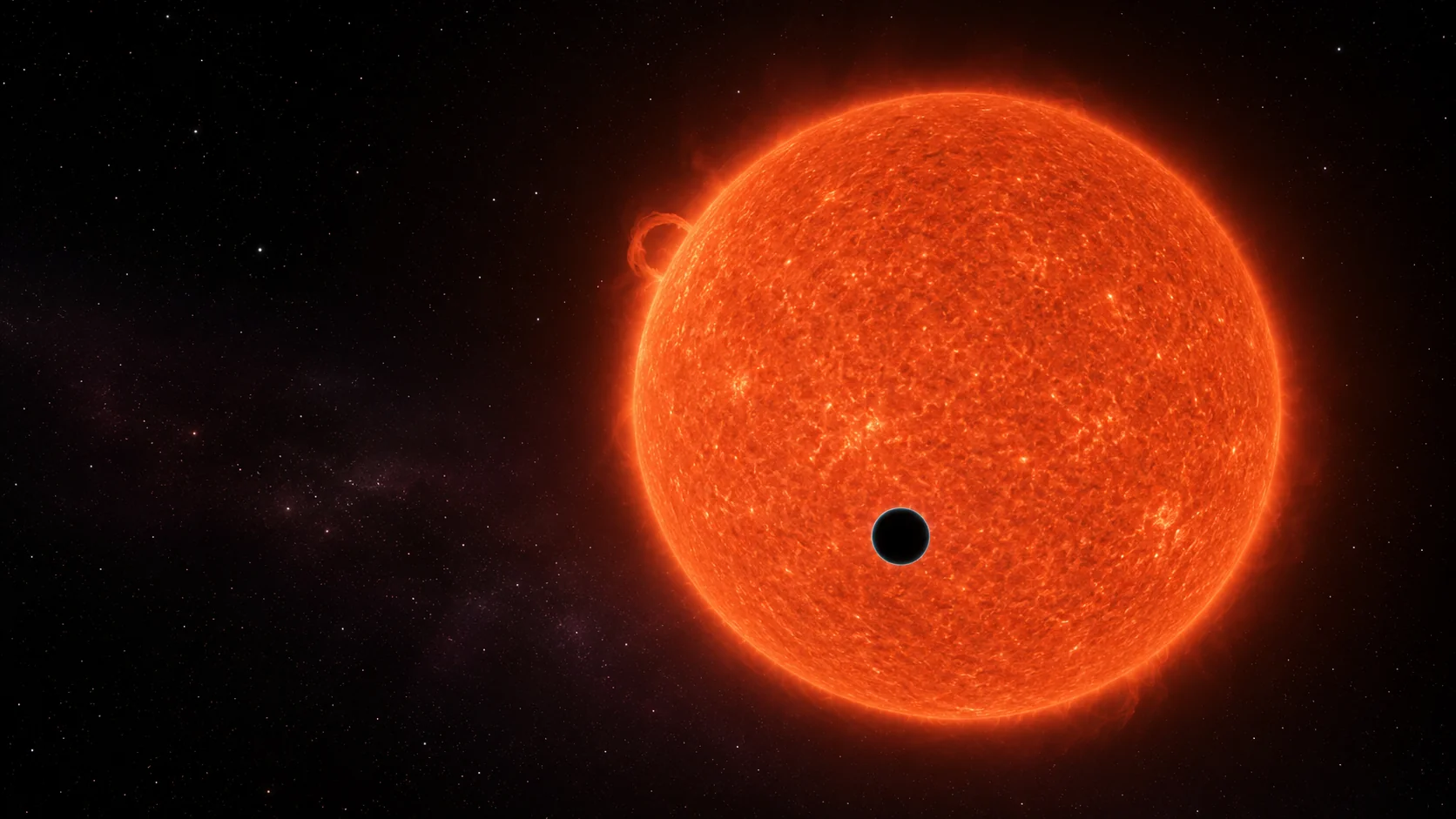
Künstler-Konzept · K2-18b im Transit vor K2-18 · keine reale Aufnahme
Eine Wissenschaft, die mitwächst
Die Wissenschaft um K2-18b läuft weiter. JWST-Beobachtungen 2026 / 2027 werden die DMS-Frage entweder erhärten oder begraben. Madhusudhan, Schmidt und andere Teams arbeiten parallel an verschiedenen Analysen. NASA priorisiert die Replikation.
Was ich hier als Science-Service beisteuere: einen Raum, in dem dieselbe Forschung für eine sechsjährige Schulklasse, eine neugierige Mutter und eine Astrophysikerin gleichzeitig zugänglich ist, ohne dass eine der drei Tiefen die anderen banalisiert. Kein Schlusswort. Eine Vermittlungsinfrastruktur, die mitwächst, wenn die nächste Studie kommt.
Wie ich es bauen würde
Vier Phasen, wissenschaftliche Begleitung im Kern, nicht als Anhängsel.
Verstehen
Gespräche mit dem Forschungsteam, mit Didaktik-Spezialistinnen für die jüngste Stufe, mit Wissenschaftsjournalismus. Was bleibt auf welchem Niveau wahr, was kippt in Falschheit?
Niveaus definieren
Drei Niveaus konkret ausformulieren, parallele Probetexte, Test mit Zielgruppen. Spektrum-Diagramm in drei Schichten skizzieren. Decision-Gate für die Trägerorganisation.
Bauen
Frontend mit Switcher-Komponente, die Inhalt und Diagramm synchron ändert. Spektrum als parametrisches SVG, Detail-Layer ein- und ausblendbar. Library mit Paper-Referenzen auf Explainer-Niveau verlinkt.
Pflegen
Bei laufender Forschung Updates regelmässig. Versionierung der Niveau-Texte, sichtbar machen wann was sich änderte. Wissenschaftliche Begleitung mandatiert, nicht freiwillig.
Wissenschaftliche Grundlage
Alle hier zitierten Zahlen, Konfidenzen und Aussagen stammen aus peer-reviewter oder peer-review-orientierter Literatur und werden im Explainer-Niveau direkt verlinkt.
- Madhusudhan et al. 2023 · Carbon-bearing molecules in K2-18b atmosphere · ApJL
- Madhusudhan et al. 2025 · MIRI observations of K2-18b · ApJL 982:L40
- Schmidt et al. 2025 · Re-reduction of MIRI K2-18b data · arXiv 2508.05961
- NASA · Exoplanet Archive · K2-18 system parameters
- Astronomy.com · New study revisits signs of life on K2-18b
- K2-18b · Wikipedia · System overview
Spektrum als Scrollytelling
Das elektromagnetische Spektrum als Erzähl-Reise. Genau das wissenschaftliche Werkzeug, das auch JWST bei K2-18b einsetzt.
Drei Tiefen, eine Wahrheit
Wenn deine Forschung an Schule, Öffentlichkeit und Fach gleichzeitig ankommen soll, ohne dass eine Tiefe die andere banalisiert, melde dich gern.