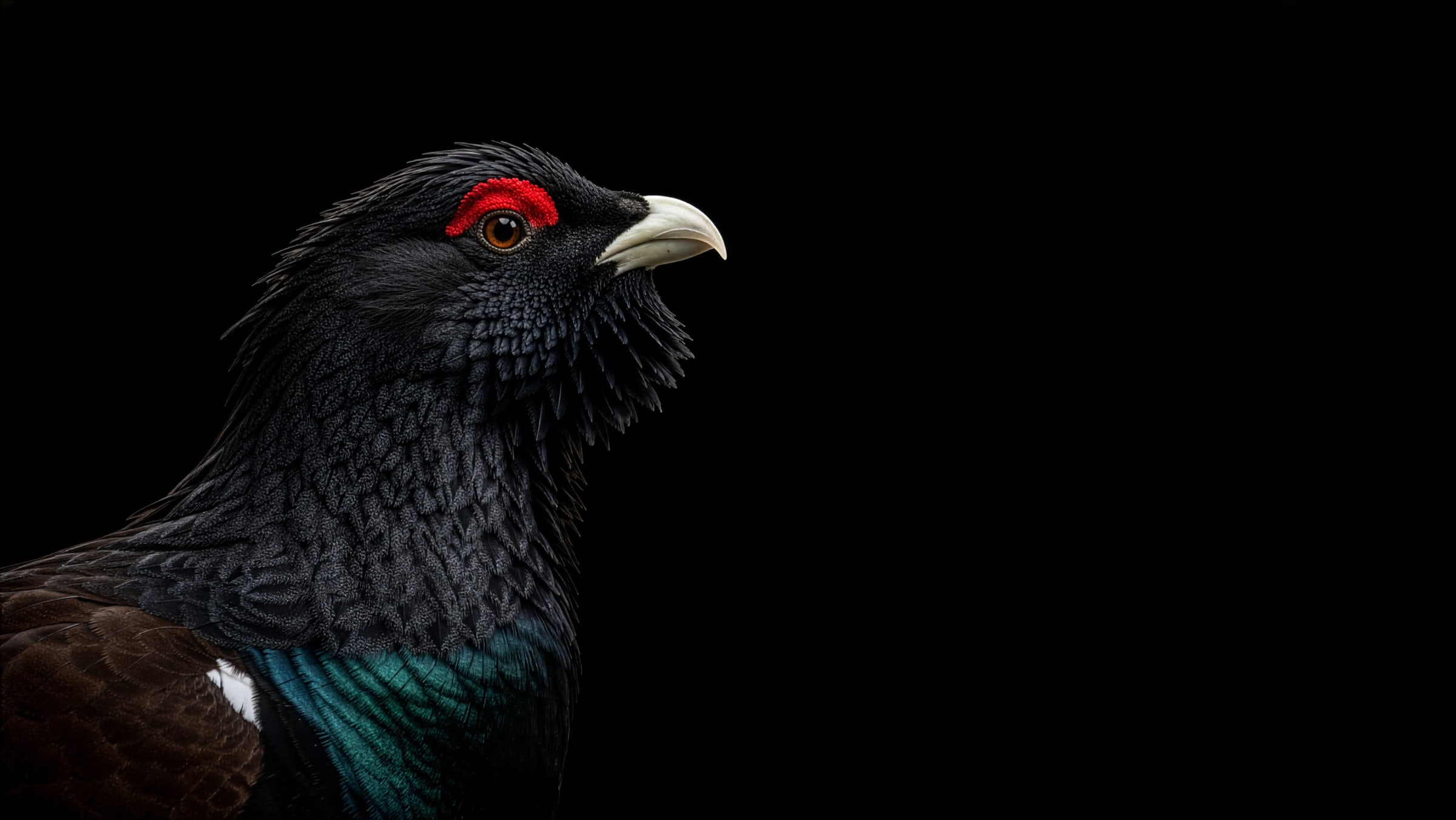
Auerhuhn. Eine Spezies, eine Welt.
Eine fiktive Mini-Plattform für eine reale Schweizer Art als Use Case für Storytelling. Wie eine wissenschaftlich saubere Geschichte aussehen kann, wenn sie zur Lesereise wird.
Auerhuhn. Eine Spezies, eine Welt.
Eine fiktive Mini-Plattform für eine reale Schweizer Art als Use Case für Storytelling. Wie eine wissenschaftlich saubere Geschichte aussehen kann, wenn sie zur Lesereise wird.
Eine Geschichte, die wissenschaftlich ehrlich Nähe schafft.
Was dieser Service ist
Storytelling als Service: eine Spezies, ein Phänomen, einen Menschen zur Welt machen, die jemand betreten kann. Eine Lesereise mit Atem, mit Daten, mit Quellen.
Die Subpage zeigt die Anatomie einer solchen Welt am Beispiel des Schweizer Auerhuhns. Die Geschichte ist real, der Bedarf ebenso. Die Plattform ist eine Skizze davon, wie eine Schweizer Naturschutzorganisation diese Geschichte für eine breite Öffentlichkeit erlebbar machen könnte.
Akte
Sechs erzählerische Abschnitte als Anatomie
Atem
Audio, Bild und Pulse zwischen den Akten
Daten
Wissenschaftliche Visualisierungen, eingebettet
Quellen
Jede Aussage zitierbar verlinkt
Wofür passt es, wofür nicht
- eine bedrohte Art, ein laufendes Forschungsprojekt, eine historische Figur
- Organisationen mit fertiger Recherche, aber ohne passendes Format
- Themen mit emotionalem Kern und harter Datengrundlage
- Vermittlung an Publikum jenseits der Fachöffentlichkeit
- klassische Imagebroschüren oder PR-Webseiten
- Themen ohne wissenschaftliche oder dokumentarische Basis
- Plattformen die ständige Inhaltspflege durch ein Team brauchen
- Mass-Market-Kampagnen mit Reichweite als Hauptziel
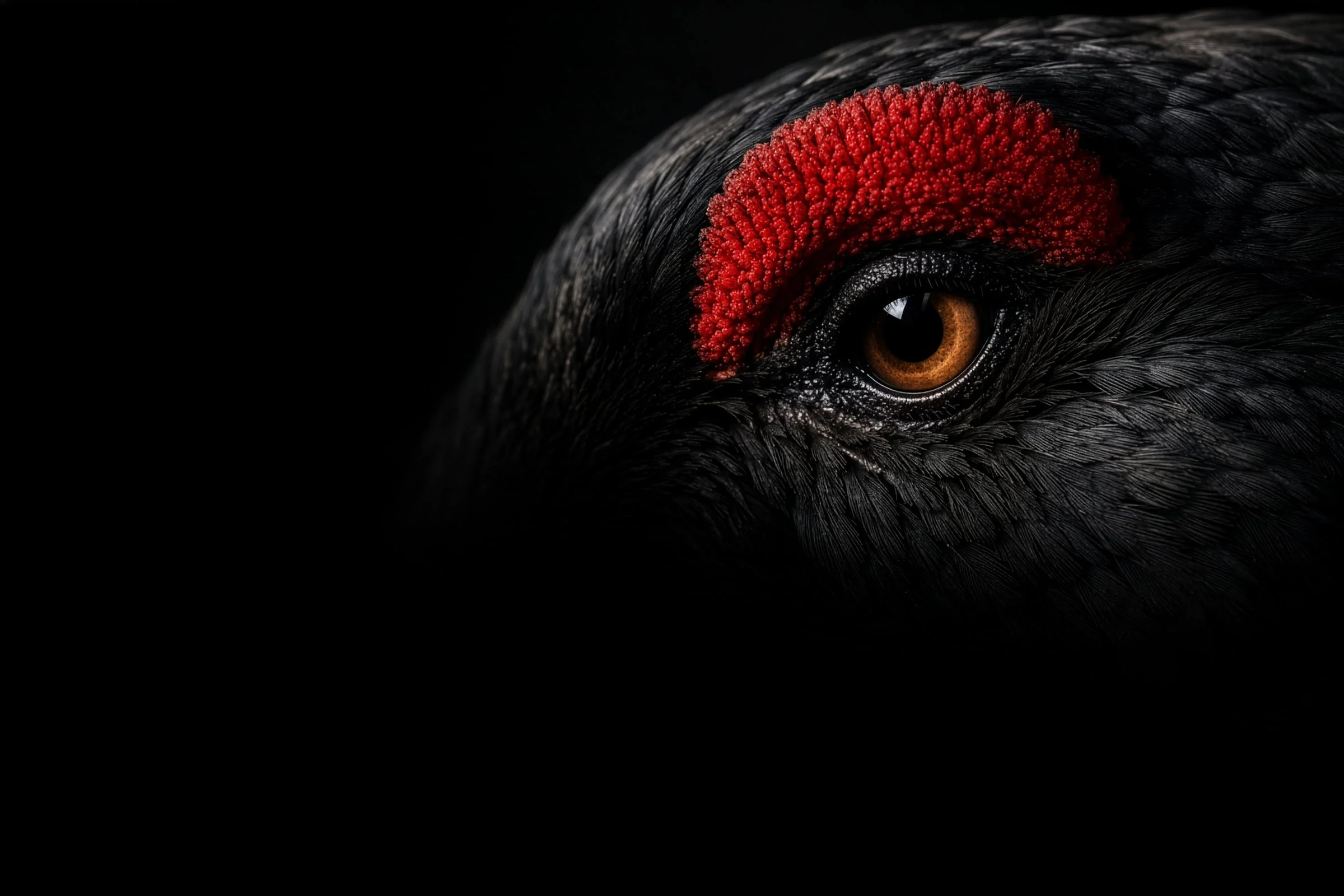
Die Ausgangslage
Eine Schweizer Naturschutzorganisation will die Auerhuhn-Geschichte einer breiten Öffentlichkeit nahebringen. Faltflyer, Jahresbericht und Medienmitteilung sind erprobt und erreichen die übliche Zielgruppe.
Was wäre, wenn die Geschichte stattdessen als atmosphärische Lesereise existierte. Mit Balz-Audio, Live-Verbreitungsdaten, einem visuellen Vergleich der historischen Schrumpfung. Mit Quellen, die offenliegen, und einer Tiefe, die die Wissenschaft trägt.
Das Folgende ist diese Welt als Skizze.
Sechs Akte, eine Spezies
So könnte die Auerhuhn-Plattform aufgebaut sein. Jeder Akt ein Schritt tiefer in die Geschichte, jeder Akt mit echten Daten und Quellen.
Begegnung
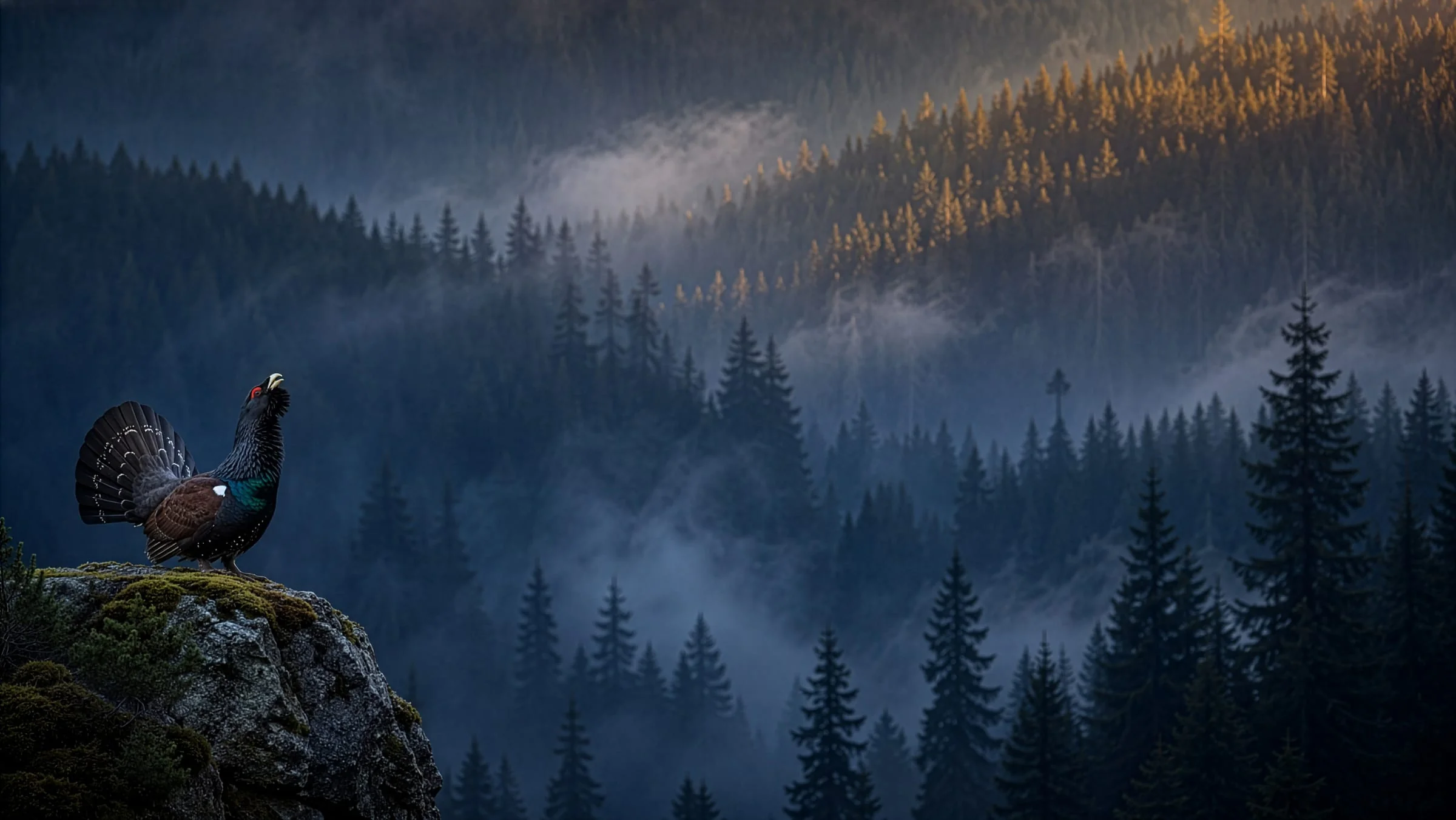
Eine Stimme, älter als die meisten Wälder. Der Balzgesang des Auerhahns wechselt zwischen trockenem Klicken, metallischem Schleifen und einem kurzen finalen Schlag. Im April und Mai versammeln sich die Hähne vor Sonnenaufgang an traditionellen Balzplätzen, eine Tradition die seit Jahrtausenden in denselben Wäldern weitergegeben wird.
Balz am Balzplatz
Pavel Pelz · Kvilda, Tschechien
Lebensraum
Heute leben rund die Hälfte aller Schweizer Auerhähne in Graubünden. Die Schwerpunktgebiete im Engadin liegen am Talhang zwischen Susch, Zernez und Brail sowie um S-chanf. Aus weiten Teilen des Landes ist die Art verschwunden: aus dem zentralen Jura, dem westlichen Alpennordrand, den inneralpinen Tälern der Zentralschweiz.
Schematische Darstellung der Verbreitungsschwerpunkte nach Brutvogelatlas und Auerhuhn-Konzept Graubünden. Genaue Koordinaten werden bewusst nicht gezeigt, die Art ist störungsempfindlich.
Bestand
Über 50 Jahre verlor die Schweiz mehr als die Hälfte ihrer Auerhähne. 1971 wurden noch rund 900–1000 Hähne gezählt. 2001 waren es 450–500. Stand 2025 liegt die Schätzung bei 380–480 Hähnen.
Was diese Zahlen nicht zeigen: dass dieselbe Spezies einst von Genf bis ins Engadin in fast jedem Schweizer Bergwald stand. Heute drängt sie sich auf wenige Schwerpunktgebiete, ihre Vorkommen liegen wie Inseln in einer Landschaft, durch die sie sich kaum noch bewegen kann.
Bestandszahlen nach Brutvogelatlas / Schweizerische Vogelwarte Sempach.
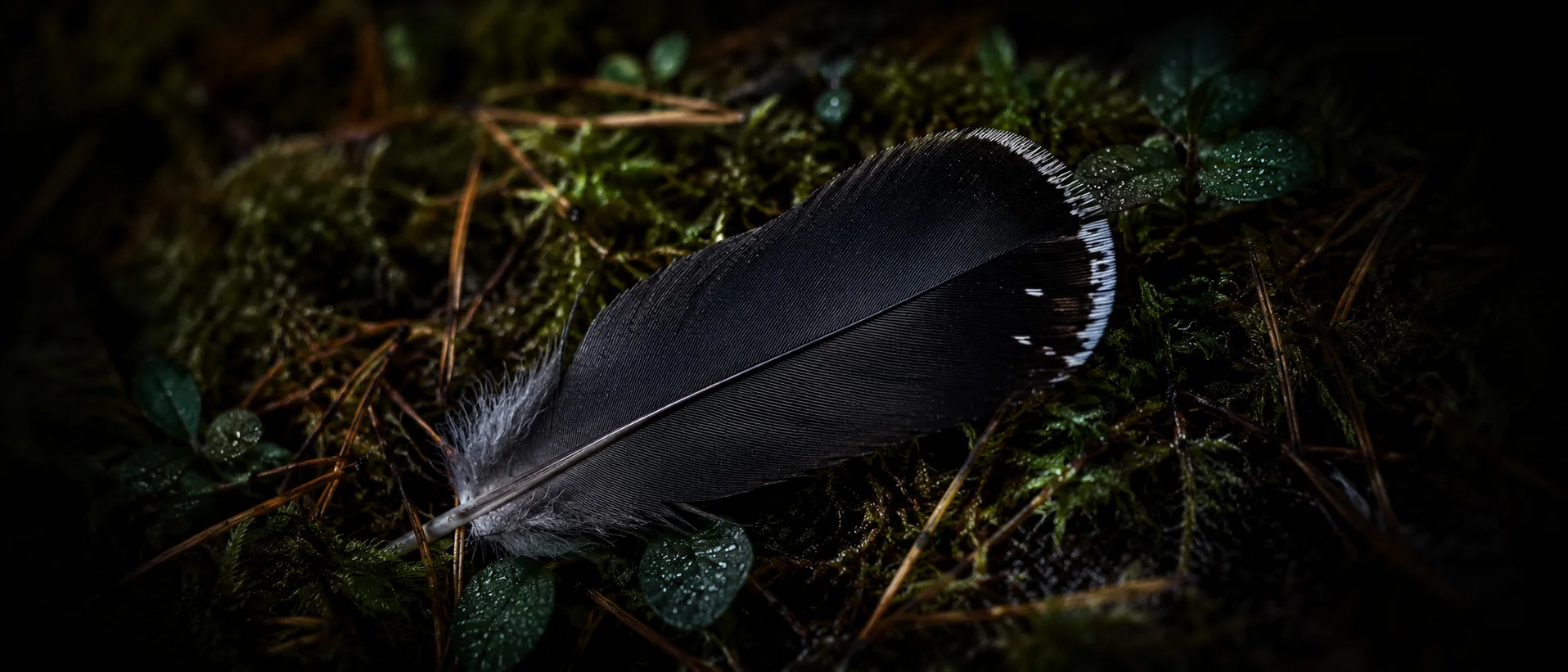
Die vier Ursachen
Der BAFU-Aktionsplan nennt vier Hauptursachen für den Rückgang. Sie wirken zusammen, nicht einzeln. Jede für sich wäre zu bewältigen, alle zugleich verschieben das Gleichgewicht.
Veränderter Wald
Wer heute durch einen Schweizer Bergwald geht, findet selten noch das, was eine Hennenmutter mit ihren Küken braucht.
Wälder wuchern zu, werden dunkler, gleichförmiger. Das Auerhuhn braucht offenen, strukturreichen Nadelwald mit alten Bäumen und Bodenvegetation, nicht den dichten Wirtschaftswald, der heute Standard ist.
Zerschnittener Lebensraum
Eine Strasse, eine Bahnlinie, ein Skigebiet, und ein Wald wird zur Insel.
Strassen, Skigebiete, Siedlungen schneiden die einst zusammenhängenden Bergwälder in Inseln. Genetischer Austausch wird schwierig, kleine Teilpopulationen verlieren ihre Stabilität.
Störung durch Mensch
Im Winter zählt jede Kalorie. Wer den Hahn aufschreckt, kostet ihn Reserven, die er nicht mehr hat.
Skitouren, Schneeschuhwanderer, Mountainbike-Trails im Winterhabitat verbrauchen Reserven der Tiere zur Unzeit. Eine wiederholte Störung im Frühling kann eine Brut kosten.
Klima und Fressfeinde
Ein zu warmer Winter, ein zu nasser Frühling, ein Wildschwein mehr im Wald.
Mildere, schneearme Winter verändern das Nahrungsangebot, feuchtere Frühlinge erhöhen die Kükensterblichkeit. Gleichzeitig hat die Wildschwein- und Fuchs-Dichte zugenommen.
Ein überraschender Befund
Eine Langzeitstudie aus acht Jura-Waldflächen, ausgewertet zwischen 2009 und 2015, zeigte einen Rückgang der Gesamtpopulation von zwei Prozent pro Jahr. Doch die Geschlechter-getrennte Analyse offenbarte: nur die Männchen-Zahlen schrumpften. Die Weibchen-Population blieb in derselben Zeit stabil.
Ein solcher Befund ist nicht intuitiv. Er deutet auf geschlechtsspezifische Sterblichkeit hin, mögliche Ursachen reichen von Prädatoren-Selektion bis zu räumlich unterschiedlicher Habitatnutzung. Genau diese Art von Befund braucht Vermittlungsraum, er widerspricht dem einfachen Narrativ.
Mollet et al., bioRxiv 2019.
Dieselbe Spezies stand einst von Genf bis ins Engadin in fast jedem Schweizer Bergwald.
Verbreitungs-Geschichte · Schweizerische Vogelwarte Sempach
Was geschieht
Der Aktionsplan Auerhuhn Schweiz ist seit 2008 in Kraft. Bund und Kantone koordinieren forstliche Massnahmen, Schutzgebiete, Wildruhezonen. Die Schweizerische Vogelwarte Sempach und BirdLife Schweiz tragen Forschung und Sensibilisierung. Graubünden hat ein eigenes Auerhuhn-Konzept, das die Schwerpunkträume regional differenziert.
Was ich hier beisteuern würde: eine Lesereise, die diese Forschung trägt, ohne sie zu vereinfachen. Die Plattform ist kein Aufruf. Sie ist ein Raum, in dem jemand zwanzig Minuten verbringen und am Ende mehr verstehen kann als zuvor. Nicht nur über das Auerhuhn. Auch über das, was zu tun bleibt.
Wie ich es bauen würde
Vier Phasen, in dieser Reihenfolge, mit klaren Übergaben.
Verstehen
Gespräche mit der Trägerorganisation, mit den Wissenschaftlern, mit Naturschutz-Praktikern. Was ist die Geschichte, die noch fehlt? Welche Daten liegen vor, welche Quellen sind belastbar?
Konzept
Erste Skizze der Welt: Anzahl Akte, Ton, Tiefe. Welche Daten als Visualisierungen, welche als Prosa. Welche Medien: Audio, Bild, interaktive Karte. Konzept-Review mit der Organisation, dann Freigabe.
Bau
Editorial-Text, Visualisierungen, Audio-Integration, Live-Daten-Anbindung soweit sinnvoll. Performance-Budget von Anfang an: die Seite muss auf einem alten Smartphone in dreissig Sekunden lesbar sein.
Politur
Wissenschaftliche Gegenlese, redaktionelle Schlussrunde, Quellen-Check. Übergabe an die Organisation mit Wartungsdokumentation.
Wissenschaftliche Grundlage
Alle Daten und Aussagen auf dieser Seite stützen sich auf die folgenden Quellen.
- Schweizerische Vogelwarte Sempach — Artenförderung Auerhuhn
- BAFU — Aktionsplan Auerhuhn Schweiz (PDF)
- waldwissen.net — Aktionsplan Auerhuhn Schweiz
- Artenförderung Vögel Schweiz — Merkblatt Auerhuhn (PDF)
- Auerhuhn-Konzept Graubünden (PDF)
- Mollet, Saniga & Bollmann — Sex-specific population dynamics (bioRxiv 2019)
- Mollet et al. — Genetic analyses of non-invasive samples (Conservation Genetics)
- BirdLife Schweiz — Aktionsplan Auerhuhn
- SRF News — Wo das Auerhuhn noch lebt
- ornitho.ch — Schweizerische Vogelwarte
- xeno-canto — Tetrao urogallus Audio-Archive (CC)
Erdgeschichte als Scrollytelling
Eine Scrollytelling-Reise durch die Schichten der Erdgeschichte. Gleiches erzählerisches Pattern wie eine Story-Subpage: Akte, Atem, Daten.
Eine Welt zu erzählen?
Wenn du an einer Geschichte arbeitest, die mehr Atemraum verdient als ein Faltflyer, melde dich gern. Erstgespräch unverbindlich.